
EXECUTIVE COACHING FOR BUSINESS OWNERS
Founders and Business Owners
Every stage of growing a business asks something different of you as a leader.
The skills that helped you start the business aren’t always the ones that help it grow, build a leadership team, or prepare it for a successful transition.
As your business evolves, your leadership has to evolve with it.
If you’ve found yourself wondering,
Why does everything still seem to come back to me?
Why is it so hard to let go, even when I know I should?
Why do I feel like I can’t step away without something falling apart?
…you’re not alone.
There’s another way to lead, one that allows both you and your business to grow.
THE UNINTENTIONAL REALITY
You didn’t build your business so that everything would always depend on you.
Building a successful business requires hard work. Long hours, solving problems, and carrying responsibility come with the territory.
But there often comes a point when the business no longer feels the way it once did.

The same conversations keep coming up. Projects take longer to move forward. A capable employee still isn’t stepping into the role you know they’re capable of. Instead of focusing on the future, you’re spending more time putting out fires, making decisions that shouldn’t require your attention, or catching up on work long after everyone else has gone home.
Not because you’re doing something wrong.
Because the business has reached a point where it requires something different from you as a leader.
The Leadership Challenge No One Talks About
Building a successful business changes more than the business itself.
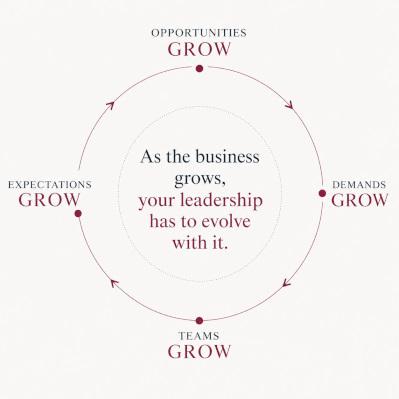
As opportunities grow, so do the demands. Decisions carry greater consequences. Teams become larger and more diverse. Competing priorities multiply. The expectations of customers, employees, and the marketplace continue to evolve.
Every new stage brings new complexity.
The way you led when the business was smaller may no longer be enough to help you enjoy leading it, prepare it for what’s next, or create the kind of business—and life—you ultimately want.
That’s not a sign you’ve done something wrong.
It’s a sign that leadership, like the business itself, continues to evolve.
A DIFFERENT WAY TO LEAD
There comes a point when working harder is no longer the answer.
The opportunity isn’t to become more efficient or simply get better at managing more.
It’s to lead differently.
As you begin to see your business, your team, and your role differently, the challenges that once felt constant often begin to change. Conversations become more productive. Decisions become clearer. Capable people begin taking greater ownership. Instead of reacting to the latest issue, you’re able to focus more intentionally on what will move the business forward.
You don’t stop caring deeply about the business you’ve built. But you stop feeling like you have to carry it all yourself.
Leadership begins to feel lighter. Not because the business is less demanding. But because you’re leading it in a way that’s more intentional, more sustainable, and ultimately creates greater freedom—for you, your team, and the future of your business.

PERSPECTIVE
What You Can’t Always See From the Inside
When you’ve spent years building a business, it’s natural to become deeply immersed in it.
You’re making decisions every day. Responding to challenges. Solving problems. Carrying responsibility for employees, customers, and the future of something you’ve invested so much of yourself in.
From the inside, it’s difficult to see the patterns that may be limiting you—not because you lack experience or ability, but because you’re too close to them.
Sometimes, the way you’ve always approached a situation no longer serves the stage of business you’re in today. Sometimes a long-held assumption quietly shapes decisions without you even realizing it. And sometimes the greatest opportunity isn’t changing the business at all—it’s changing the way you think about it.
That’s where coaching becomes valuable.
Not because someone else has the answers. But a different perspective helps you see possibilities that are difficult to discover on your own.
WHAT BECOMES POSSIBLE
Every business owner’s journey is different.
These examples illustrate what can become possible when leaders begin seeing themselves, their business, and their role differently.
SUCCESSION & TRANSITION
Preparing the Business for What’s Next
A successful medical practice owner wanted to sell his business, but years of high turnover made it difficult to build the stable team a buyer would expect.
Read the Story
As he became more aware of how his leadership style affected others and learned to regulate his own reactions, relationships with his team improved and turnover declined. The practice became a stronger, healthier organization. When an unexpected opportunity to sell the business arose, he was ready to explore it with confidence—and ultimately sold the practice.
LIFE BEYOND THE BUSINESS
Taking a Real Vacation Again
For years, a business owner never truly stepped away from work. Every vacation included a laptop, late-night emails, and the constant feeling that the business couldn’t function without her.
Read the Story
By building greater trust in her team, creating clear decision-making processes, and becoming more comfortable allowing others to lead, she was finally able to take time away knowing the business would continue moving forward without her constant involvement.
LEADERSHIP EVOLUTION
Growing Beyond the Founder
The founder of a nonprofit had reached the point where passion and hard work alone were no longer enough. To expand the organization’s impact, she needed to build a team instead of continuing to carry the organization herself.
Read the Story
She approached hiring intentionally, empowered people from the very beginning, and gradually shifted her role from doing the work to leading the organization. That transition created a stronger foundation for the nonprofit’s continued growth.
PERSONAL LEADERSHIP STYLE
Discovering His Own Way to Lead
A technology founder built a successful company doing what he loved – creating innovative technology. As the business grew, so did the expectation that he would raise capital, build relationships, and represent the company.
Read the Story
Those responsibilities felt draining and completely different from the work that had inspired him to start the business.
Rather than trying to become someone he wasn’t, he discovered an authentic leadership style that fit his strengths and values. He learned how to approach leadership conversations, build relationships, and secure the support his business needed without sacrificing who he was. Today, he still enjoys the technical work that first inspired him, but he now equally embraces leading the business.
The First Step Isn’t a Commitment
It’s simply having a conversation.
Choosing a coach is an important decision. I believe you should have the opportunity to experience coaching before deciding whether we’re the right fit.
We’ll start by talking about what’s happening in your business, how you’re experiencing your role as its leader, and what may be contributing to the challenges you’re facing. There is no expectation or commitment beyond that conversation.
If it feels like a good fit, we’ll schedule a complimentary coaching conversation so you can experience what it’s actually like to work together before deciding whether a longer-term engagement makes sense.
Sometimes that coaching conversation is enough to create a meaningful shift in perspective. Sometimes it’s the beginning of a coaching partnership. Either way, you’ll have experienced the process before making your decision.