
PHYSICIAN LEADERSHIP COACH
Physician Leaders
One hour, you’re making life-changing clinical decisions. An hour later, you’re sitting in a meeting discussing budgets, staffing, organizational priorities, or the future of your department.
Physician leadership carries a unique kind of complexity.
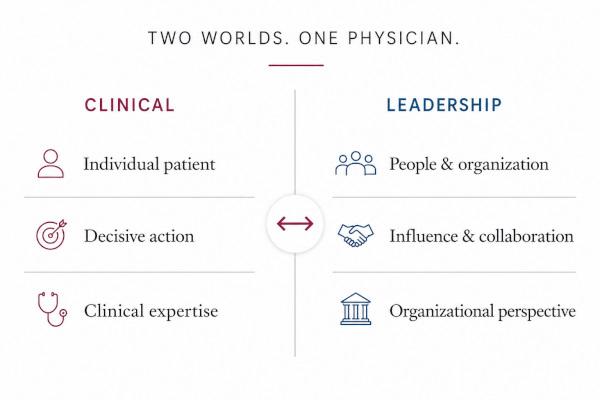
You’re constantly moving between two worlds that operate differently and require different ways of thinking, communicating, and making decisions.
In one role, you’re focused on the care of an individual patient. In the other, you’re contributing to decisions that affect physicians, staff, departments, and the organization as a whole.
Both roles matter. Both require your best thinking. But they ask different things of you.
The challenge isn’t simply managing the workload. It’s continually adapting your thinking, your communication style, and your approach as you move between two very different roles, often with little time to reset in between.
Where This Complexity Shows Up
The complexity of physician leadership doesn’t usually show up in one defining moment.
It shows up in the rhythm of your day.
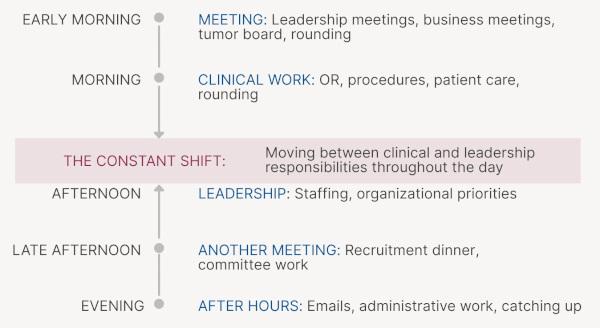
Over time, the challenge becomes more than managing your workload.
It becomes managing the constant mental shift between two roles that demand different ways of thinking, communicating, and leading. What works exceptionally well in one role doesn’t always produce the same results in the other.
COACHING APPROACH
A Different Way to Lead

The skills that made you an exceptional clinician remain essential. Physician leadership asks you to develop another way of leading alongside them.
That begins with recognizing that what makes you an exceptional clinician isn’t always what a leadership situation requires. Rather than relying on a single way of thinking or communicating, you learn to adapt your approach to the people, the conversation, and the context.
As you become more intentional in how you move between your clinical and leadership roles, decisions become clearer, conversations become more productive, and leadership feels less reactive, lighter, and more purposeful.
You don’t leave behind your clinical expertise. You expand it with the leadership perspective needed to influence, collaborate, and lead effectively across the organization.
What Tends to Change
As you become more intentional in how you lead, the work itself may not become less demanding, but it often begins to feel more manageable.
Leadership doesn’t become simpler. You become better equipped to navigate its complexity with greater confidence, perspective, and intention.

WHY THIS MATTERS
The demands of physician leadership aren’t likely to become simpler.
Healthcare will continue to evolve. Organizations will continue to face competing priorities. Difficult conversations, complex decisions, and competing demands will remain part of the role.
What can change is how you experience it.
When you’re able to move intentionally between your clinical and leadership responsibilities, you lead with greater clarity, confidence, and perspective. You communicate more effectively across different audiences, make decisions with greater intention, and become less reactive to the constant demands around you.
You don’t have to choose between being an exceptional physician and an effective leader.
You can be both.
And when you are, your influence extends beyond the patients you care for to the people you lead, the teams you shape, and the organization you’re helping to build.
Leadership in Practice
Building a New Program with Intention
When a thoracic surgeon accepted the role of Program Director at a new hospital, she knew she wasn’t just stepping into a new position—she was stepping into a new way of leading.
Read the Story
Although she had never held a formal leadership role before, she understood that clinical expertise alone wouldn’t determine her success.
From the beginning, she was intentional about building strong relationships with administrators and her new team. She learned how to communicate her vision, advocate effectively for the resources her program needed, and establish trust across the organization.
In a relatively short time, she built a thriving program. Just as importantly, she built collaborative relationships that made the work both successful and deeply rewarding.
Leadership isn’t just about building a successful program. It’s about building the relationships that make long-term success possible.
Moving Between Two Worlds
As the physician leader representing his specialty across an entire health system, one surgeon regularly found himself leaving the operating room and walking directly into leadership meetings.
Read the Story
The transition was immediate, but the mindset wasn’t.
He realized he was carrying the urgency and intensity of clinical work into conversations that required a different kind of presence, communication style, and influence. By the end of the day, he was still catching up on emails late into the evening, trying to keep pace with both roles.
Together, we focused on helping him transition between his clinical and leadership responsibilities, become more deliberate about where his presence added the greatest value, and approach conversations with administrators in ways that created greater understanding and influence.
The workload didn’t disappear. But leadership became more intentional, conversations became more productive, and his days became more manageable.
Sometimes the biggest shift isn’t working less. It’s learning to lead differently in each environment.
How It Starts
Physician leadership coaching begins with a conversation – not a commitment.
Choosing a physician leadership coach is an important decision. You should have an opportunity to experience the process before deciding whether we’re the right fit.
We’ll start by talking about your role, the challenges you’re navigating, and what you’d like to be different. You’ll learn about my approach, ask questions, and get a sense of what working together could look like.
If you’d like to continue, we’ll schedule a complimentary coaching conversation so you can experience the process firsthand.
Afterward, we’ll discuss whether working together makes sense and what that could look like based on your goals.