
EXECUTIVE COACHING
Partners in Professional Service Firms
One conversation is with a key client. The next is with a fellow partner.
Before the day is over, you’re thinking about business development, mentoring someone on your team, and making decisions that affect both your clients and your firm.
Partnership carries a unique kind of complexity.
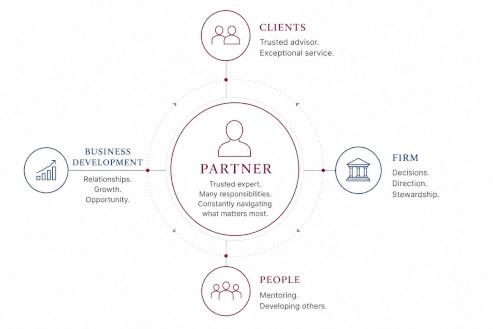
You’re expected to deliver exceptional client service, contribute to the growth of the firm, build and maintain strong relationships, navigate differing perspectives among partners, and continue developing business—all while remaining a trusted expert in your field.
Each responsibility matters.
Each relationship requires something different from you.
Success is no longer defined solely by the quality of your expertise. It also depends on how intentionally you navigate competing priorities, complex relationships, and conversations that don’t always have a clear right answer.
That complexity isn’t a sign you’re doing something wrong.
It’s the reality of leadership within a professional service firm.
Where This Complexity Shows Up
The complexity of a partnership rarely comes from a single significant event.
It shows up in the flow of your day and the competing expectations you’re continually navigating.

You’re preparing for a high-stakes client conversation while something unresolved from a partner discussion is still on your mind.
You find yourself balancing what’s best for your client with what’s best for the firm.
You know business development is important, but it competes with client work that’s immediate, visible, and difficult to step away from.
You move from serving clients to business development, shifting your focus and communication style in a matter of minutes.
You navigate strong personalities, differing perspectives, and conversations that require influence more than authority.
You leave work for the day, yet conversations, decisions, and unresolved situations continue to occupy your thoughts long after you’ve gone home.
Over time, the challenge becomes more than managing your workload.
It’s continually adapting to different people, priorities, and expectations—often with very little opportunity to reset between them.
What works well in one conversation, one relationship, or one situation doesn’t always produce the same results in the next.

COACHING APPROACH
A Different Way to Lead
The complexity of partnership isn’t something you eliminate. It’s something you learn to navigate.
That begins with recognizing that different situations require different approaches. Rather than relying on one way of thinking, communicating, or leading, you learn to adapt your approach to the person, the conversation, and the context.
As you become more intentional in how you respond, conversations become more productive, decisions become clearer, and challenging situations take less of your time and energy.
You develop greater confidence navigating difficult partner relationships, growing business in ways that align with who you are, balancing competing priorities, and leading with greater clarity and purpose.
The work doesn’t become less important.
You simply become better equipped to navigate its complexity.
What Begins to Change
As you become more intentional in how you navigate the different demands of partnership, the circumstances around you may not change. But the way you respond to them often does.
Partnership doesn’t become less complex. You become more confident and intentional in how you navigate it.

WHY THIS MATTERS
The demands of partnership aren’t likely to become simpler.
Client expectations will continue to evolve. Firms will continue to adapt. New opportunities, competing priorities, difficult conversations, and complex decisions will remain part of the role.
What can change is how you experience it.
When you navigate those situations with greater intention, conversations become more productive, relationships become stronger, and decisions take less of your time and energy. You spend less time replaying difficult interactions, carrying unresolved issues, or questioning how something could have gone differently.
Instead, you develop greater confidence in your ability to navigate complexity, communicate effectively with a wide range of people and personalities, and lead in a way that aligns with both your values and your responsibilities.
The role doesn’t become less demanding. You become better equipped to lead within it.
Leadership in Practice
Restoring a Challenging Partner Relationship
A partner loved his work, respected his firm, and was deeply committed to his clients. Yet one ongoing relationship with another partner created constant tension. The conversations stayed with him long after they ended, affecting his focus and enjoyment of the work.
READ THE STORY
Together, we explored what was within his control, how he wanted to show up in those conversations, and how to communicate in ways that reduced defensiveness rather than escalating it. As his communication skills expanded, so did his confidence.
Over time, the relationship became more constructive. The tension no longer followed him through the rest of his day, and he was able to focus his energy where it mattered most.
Sometimes the greatest shift isn’t changing the other person. It’s changing how you engage with them.
Leading Without Losing Yourself
As a partner in a growing firm, she loved her work and the opportunity to help shape the future of the business. But she was also raising children while navigating the growing needs of aging parents.
READ THE STORY
At work, she was balancing client responsibilities, leadership decisions, and the day-to-day demands of running the firm. At home, she wanted to be fully present for the people who mattered most.
Together, we worked on making more intentional decisions about where her time, energy, and attention were truly needed. Instead of feeling pulled equally in every direction, she gained greater clarity about what required her involvement, what could be delegated, and where she could set healthier boundaries.
The demands of her work and her family didn’t disappear.
But she no longer felt she had to carry all of it, all of the time.
Leadership isn’t only about meeting every expectation. It’s about making intentional choices that allow you to lead well at work while remaining present for the life you’re building outside of it.
Influencing Change with Patience and Purpose
A younger partner saw opportunities to modernize the firm’s approach through new technology and more efficient ways of working. The challenge wasn’t the ideas themselves. It was gaining support from more senior partners who viewed change through a different lens.
READ THE STORY
Together, we focused on how to introduce those conversations strategically, communicate new ideas in ways that invited discussion rather than resistance, and balance persistence with patience.
The ideas didn’t change overnight.
But the conversations did.
As trust grew, so did the firm’s openness to new ways of thinking.
Leadership isn’t only about having the right ideas. It’s about creating the conditions for others to move with you.
How It Starts
Leadership coaching begins with a conversation – not a commitment.
Choosing a coach is an important decision. You should have an opportunity to experience the process before deciding whether we’re the right fit.
We’ll start by talking about your role, the situations you’re navigating, and what you’d like to be different. You’ll learn about my approach, ask questions, and get a sense of what working together could look like.
If you’d like to continue, we’ll schedule a complimentary coaching conversation so you can experience the process firsthand.
Afterward, we’ll discuss whether working together makes sense and what that could look like based on your goals.