
For more than 10 years, almost every week, I have had a conversation with a dear friend of mine. During one of those conversations, she shared something with me that surprised even me.
In a hypnotherapy session, she had uncovered an experience from her childhood that she came to connect with feelings of not being worthy or deserving of love.
When she was a little girl, one of her biggest wishes was to have a dog. At age five, her parents bought her one. Less than a month later, the dog was gone. Her parents told her the dog had run away.
She was devastated. But she kept asking for another dog.
When she was about seven years old, she was given another one. Of course, at seven, she couldn’t take care of a dog the way an adult can. A couple of months later, her parents gave that dog away too.
My friend is now in her mid-50s. It wasn’t until that hypnotherapy session that she recognized how deeply she believed those experiences had affected her.
What stayed with me about her story wasn’t simply that her parents had rehomed two dogs. It was that decisions the adults probably considered practical had an entirely different meaning to the child experiencing them.
And that raises a larger question.
What happens when we surrender or rehome a dog, not only to the dog, but to the people who love them?
Is rehoming a dog traumatic?
There isn’t one answer that applies to every dog.
Dogs form attachments. They learn the rhythms of a household, the people in it, their routines, their environment and what they can expect from day to day. A sudden change in all of that can certainly be stressful and confusing.
Some dogs may initially show changes in appetite, sleep, energy or behavior. Others adjust surprisingly quickly.
A dog’s response depends on many things: temperament, previous experiences, age, the circumstances surrounding the transition and, importantly, what happens next.
Rehoming doesn’t automatically mean that a dog will be emotionally damaged for life. Dogs can be remarkably adaptable. A stable new home with clear routines, appropriate exercise, consistency, safety and connection can help a dog settle and form new relationships.
I’ve seen this many times through my work with rescue dogs.
Dogs can come from difficult circumstances and still learn to trust again. What happened before matters. But so does what happens next.
How does giving away a dog affect a child?
Children can experience the loss very differently from adults.
To a parent, rehoming may be a practical decision. Perhaps the dog has behavioral problems. The family doesn’t have enough time. A move changes the living situation. There are financial pressures. Or everyone underestimated what caring for a dog would require.
To a child, none of those explanations necessarily change the emotional experience.
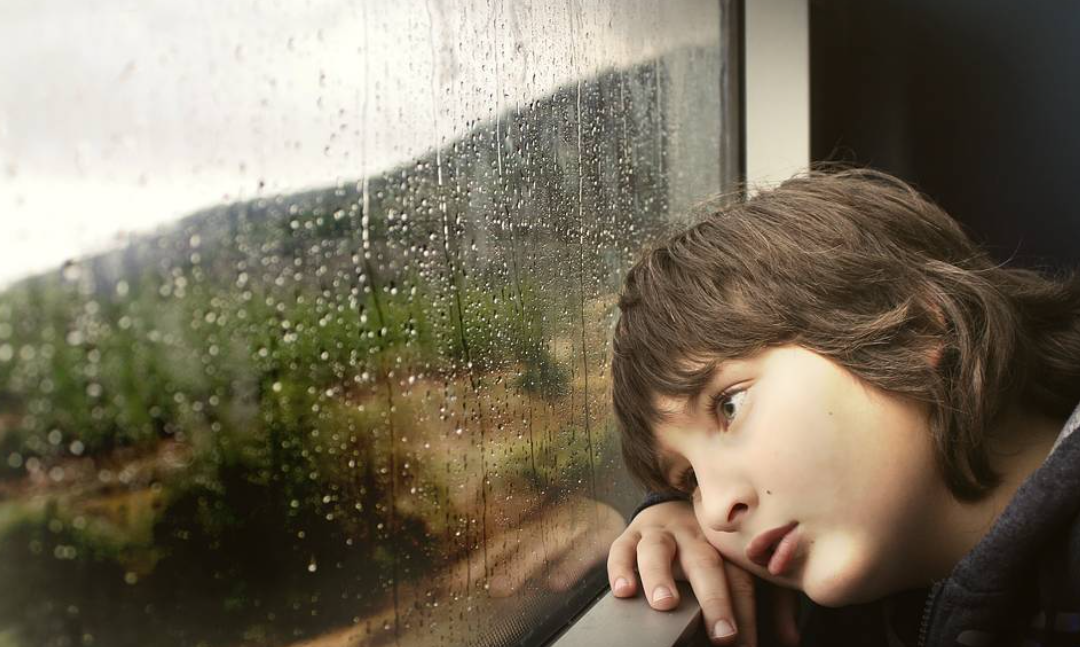
The dog may be a companion, a source of comfort or simply part of what makes home feel like home. When that relationship suddenly disappears, a child may experience grief, anger, confusion or even guilt.
Young children may also create their own explanation for what happened.
Did I do something wrong?
Why didn’t I get to say goodbye?
If someone we love can just disappear, could that happen to me too?
That doesn’t mean every child whose family rehomes a pet will be traumatized. It does mean adults shouldn’t dismiss the experience simply because the relationship involved an animal.
For the child, the loss can be very real.
If a dog must be rehomed, include the child in the process
Sometimes rehoming truly is the responsible choice.
Life changes. Circumstances change. And occasionally the needs of a particular dog and the realities of a particular household simply aren’t compatible.
If that’s the case, how the adults handle the transition matters.
Whenever appropriate for the child’s age, tell them what is happening rather than allowing the dog to simply disappear. Give them room to be sad or angry. Let them ask questions. Most importantly, don’t make the child responsible for an adult decision.
A seven-year-old failing to provide everything a dog needs isn’t a seven-year-old failing the dog. Caring for a family pet ultimately remains an adult responsibility.
If possible, allowing a child to say goodbye and understand where the dog is going can also create a very different experience from suddenly discovering that the dog is gone.
Before surrendering a dog, ask what else could change
This is the part I wish more dog owners explored before deciding that the relationship simply isn’t working.
Many problems that feel overwhelming inside a household aren’t necessarily permanent problems with the dog.
Sometimes the dog needs more physical exercise or mental stimulation. Sometimes expectations don’t match the dog’s age, breed or temperament. Sometimes boundaries are inconsistent. Sometimes the humans and dog simply aren’t communicating very well.
And sometimes we keep trying to change the dog when changing the environment would make a much bigger difference.
One of the principles I use in my work with dogs is:
Change the environment, change the exercise.
If something isn’t working, I don’t immediately conclude that the dog is incapable of doing it. I look at what is happening around the dog. What are we asking? How are we asking it? What is being reinforced? What does this particular dog need in order to succeed?
That doesn’t mean every behavior problem can be solved or that every dog belongs in every home. It means it’s worth becoming curious before making a permanent decision.
Sometimes rehoming is the kinder decision
I also don’t believe people should be shamed for responsibly rehoming a dog.
There are situations in which keeping a dog isn’t in the best interest of the dog, the humans or both. A serious mismatch can create chronic stress throughout the household. Safety matters too, especially when children or other animals are involved.
Responsible ownership isn’t measured only by whether you keep a dog for life. It’s also reflected in the decisions you make when circumstances become difficult.
Before surrendering a dog, get qualified help when possible. Look honestly at what can be changed. Consider whether the problem is behavioral, environmental, medical or simply a mismatch.
And if rehoming ultimately is the best decision, make the transition as thoughtfully as you can.
What dogs have taught me about leadership
My work with dogs has shaped much more than how I think about dog training. It has changed how I think about human behavior and leadership too.
One of the biggest lessons is simple: behavior gives us information.
When a dog isn’t doing what we want, it’s easy to label the dog as stubborn, difficult or badly behaved. We do something remarkably similar with people. An employee becomes difficult, disengaged, resistant or a poor performer.
The label gives us an answer. Unfortunately, it can also stop us from asking better questions.
What is happening in the environment? Are expectations clear? Has communication been consistent? What behavior are we unintentionally reinforcing? What does this individual need from us that someone else may not?
None of that removes personal responsibility. Dogs have to learn appropriate behavior, and people remain accountable for theirs. But leadership asks us to look at our own contribution to the relationship too.
That’s one of the ideas behind my Dog-Gone Leadership approach. The lessons we learn when working with dogs can reveal a surprising amount about communication, consistency, adaptability, trust and the way we lead people.
Sometimes the individual in front of us needs to change.
And sometimes, before we decide they’re the problem, it’s worth looking at what we could change too.